You rip open the thick plastic bag, and that sharp, familiar scent of cedar immediately hits the Saturday morning air. You grab handfuls of the rich, red-brown shavings, packing them neatly around the base of your hydrangeas and right up against the concrete foundation of your home. It feels like responsible homeownership. After all, cedar is the traditional guardian of the garden, widely trusted to keep pests at bay. You step back, admiring the crisp lines and the manicured, intentional look it gives your property. It feels like you have just fortified your house against nature.
But if you scrape away that top layer a few weeks later, the reality shifts drastically. The soil beneath feels heavy, cool, and entirely saturated with retained water. You have unintentionally created a stagnant microclimate directly against your house. While the fragrant oils on the surface dry out and bake in the afternoon sun, the dense mat underneath is actively trapping moisture against your home’s most vulnerable perimeter.
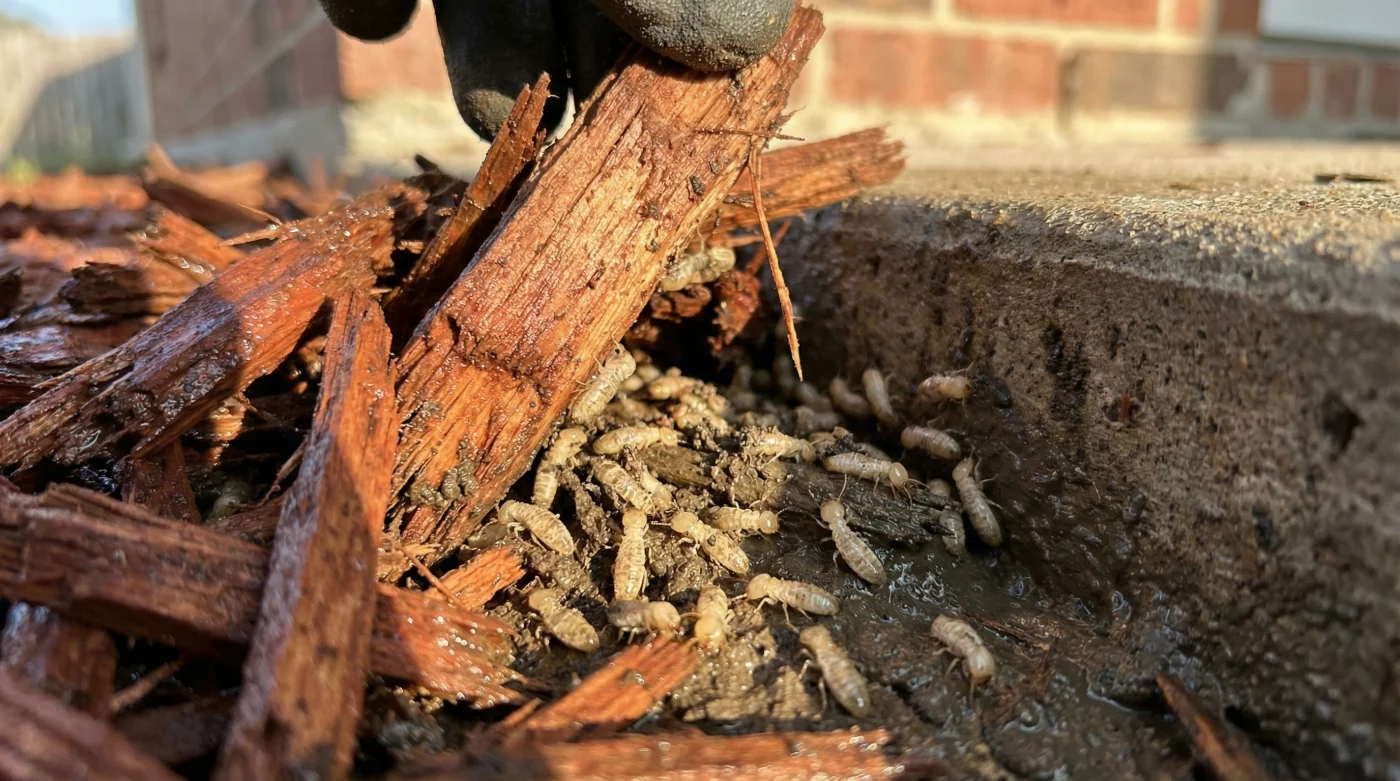
What you view as a protective botanical barrier is actually functioning as a high-efficiency biological incubator. The very material you bought to repel unwanted invaders is silently shielding them from the harsh sun, offering them the exact temperature and humidity they need to thrive under the radar. By applying that thick mulch, you have provided safe harbor for one of the most destructive forces in suburban landscaping.
The Moisture Trap and the Formosan Threat
Think of traditional mulch not as a protective blanket, but as a dense sponge left sitting on a kitchen counter. The surface might feel dry and rough to the touch, but underneath, water pools, stagnates, and breeds life. We have heavily relied on the old myth that cedar’s natural oils repel all insects across the board. While a cedar chest might keep moths off your winter wool sweaters, outdoor mulch behaves entirely differently when exposed to constant soil contact.
Once the wood chips sit in the dirt and begin the natural process of decay, the volatile compounds evaporate. The protective aromatic oils dissipate rapidly into the open air. What remains is a dense, moisture-retaining layer of decomposing organic matter pressing directly against your foundation wall. The missing ingredient in our pest control logic isn’t the type of wood we choose; it is a fundamental misunderstanding of the physics of ground moisture.
This damp, uninterrupted darkness is precisely what the Formosan subterranean termite spends its entire life searching for. Unlike native termite species that might take years to cause noticeable structural damage, Formosans are highly aggressive, organizing in massive, rapidly expanding colonies that require constant, high humidity to survive. Your cedar mulch provides the perfect, undisturbed roof for their delicate mud tubes, bypassing the dry topsoil entirely and allowing them to march directly into your home’s timber framing.
Arthur Vance, a 58-year-old structural entomologist working the humid corridors of the American South, has spent thirty years dismantling this exact landscaping mistake. Last spring, he stood in a pristine suburban yard, looking at a beautifully manicured bed of fresh cedar. “Homeowners buy it for the smell and the promise of a bug-free yard,” he explained, dragging his steel probe through the bedding. He kicked back a three-inch layer of the red chips to reveal a swarm of pale, writhing workers moving through white mud tubes. The cedar had not repelled them; it had insulated them. The dense organic matter had trapped the morning dew, keeping the soil at a perfect 72 degrees. It created a subterranean highway right over the concrete slab, entirely hidden from the homeowner’s view until the structural damage was already inside the walls.
Foundation Frontlines: Adjusting Your Strategy
Not all foundations face the exact same level of risk, and you can easily adjust your landscaping approach based on your local environment and aesthetic needs. The overarching goal is to let the foundation breathe naturally without sacrificing the visual appeal and health of your carefully planned garden beds.
For the Rainfall Realist
If you live in a region that sees heavy spring storms, unpredictable downpours, or persistent summer humidity, packing organic mulch against the house is a massive structural liability. You need an aggressive drainage strategy right now. Swap the wood chips for river rock, washed gravel, or crushed granite for the first foot extending out from the foundation. This creates an arid, hostile space that soft-bodied termites refuse to cross, forcing them to look elsewhere for food.
For the Garden Purist
- Dawn dish soap ruins protective coatings on hardwood floors
- Major hardware chains pull Roundup weed killer from shelves
- Cedar mulch attracts invasive termites to suburban home foundations
- New federal appliance regulations target specific gas stove models
- White vinegar permanently etches granite countertops within ten minutes
For the Arid Landscaper
In drier, desert-like climates, the natural risk is slightly lower, but modern irrigation systems change the mathematical probability entirely. If you have automated drip lines, soaker hoses, or sprinkler heads watering delicate plants near the house, you are artificially creating that exact damp termite haven. Ensure all irrigation spray is directed away from the siding, and keep any mulch layers strictly under two inches thick to allow for rapid evaporation during the heat of the day.
The 12-Inch Rule
Protecting your home does not require ripping out every garden bed you have built or abandoning your backyard landscaping dreams. It simply takes a mindful adjustment of how and where you apply these organic materials. Think of it as drawing a line in the sand to defend your structural perimeter.
You want to completely starve the immediate perimeter of moisture, forcing any subterranean insect scouts out into the open air where they rapidly dehydrate in the sun.
- Establish the gap: Measure exactly one foot outward from your foundation wall. This entire ring becomes your permanent zero-mulch zone.
- Dig the trench: Use a hand trowel to remove any existing wood chips, pine straw, or leaf litter from this 12-inch strip, exposing the bare, packed earth beneath.
- Slope the grade: Ensure the newly bared dirt naturally slopes downward, utilizing gravity to pull rainwater actively away from the porous concrete slab.
- Apply the arid barrier: Fill this empty gap with heavy inorganic material like pea gravel, crushed stone, or volcanic pumice to lock in the dry zone.
To execute this properly, you need a hard steel rake, a rigid tape measure, and a heavy bag of one-inch river rock. Clear the topsoil completely, ensuring no straggling wood fibers remain pressed against the concrete. Then, pour the stone and maintain the rock layer safely at roughly two inches deep. This is substantial enough to look highly intentional, but shallow enough to drain instantly after a storm. When applying organic mulch beyond this barrier, never exceed a depth of three inches.
Beyond the Perimeter
We often unintentionally smother our houses in a misguided attempt to care for them. We pack dark soil high against the vinyl siding, layer fresh mulch right over the critical weep holes, and plant dense evergreen shrubs that constantly scrape against the brick. But a house, much like the sprawling root system of an ancient oak tree, requires fresh oxygen and airflow to survive the elements.
By pulling the heavy, damp layers of cedar away from the immediate perimeter, you grant the structure space. You eliminate the silent, hidden friction of long-term decay. The deep peace of mind that comes from a completely dry, visible foundation line shifts your entire relationship with your yard. You are no longer nervously guessing what moves in the dark beneath the wood chips; you have finally brought the perimeter into the light.
A dry foundation is the single greatest pest control system you can build, and it does not cost a single dime in synthetic chemicals.
| Key Point | Detail | Added Value for the Reader |
|---|---|---|
| The 12-Inch Gap | Bare dirt or stone bordering the house | Instantly stops moisture bridging and termite mud tubes. |
| Mulch Depth | Keeping organic mulch under 3 inches | Prevents the formation of insulated microclimates. |
| Inorganic Alternatives | Pea gravel or crushed granite | Delivers a clean aesthetic without holding water. |
Frequently Asked Questions
Does cedar actually repel any bugs?
It can deter certain fabric pests like clothes moths in closed, dry environments, but its outdoor repellent properties vanish rapidly as the wood weathers and gets wet.What happens if I already have mulch against my siding?
Simply take a rake and pull it back twelve inches. Let the soil dry out in the sun for a few days to naturally disrupt any shallow insect activity.Is pine straw safer than cedar mulch?
No. While pine straw is lighter, it still traps ground moisture and provides heavy cover for subterranean termites. The 12-inch rule applies to all organic matter.How can I tell if Formosan termites are already there?
Look for pencil-thin tubes of dried mud climbing up your concrete foundation. If you spot these, do not break them; call a structural entomologist immediately.Can I use rubber mulch instead?
Rubber mulch does not decompose, but it still traps thick moisture against the soil and can leach chemicals into your garden over time. Stone is the superior choice for the foundation perimeter.