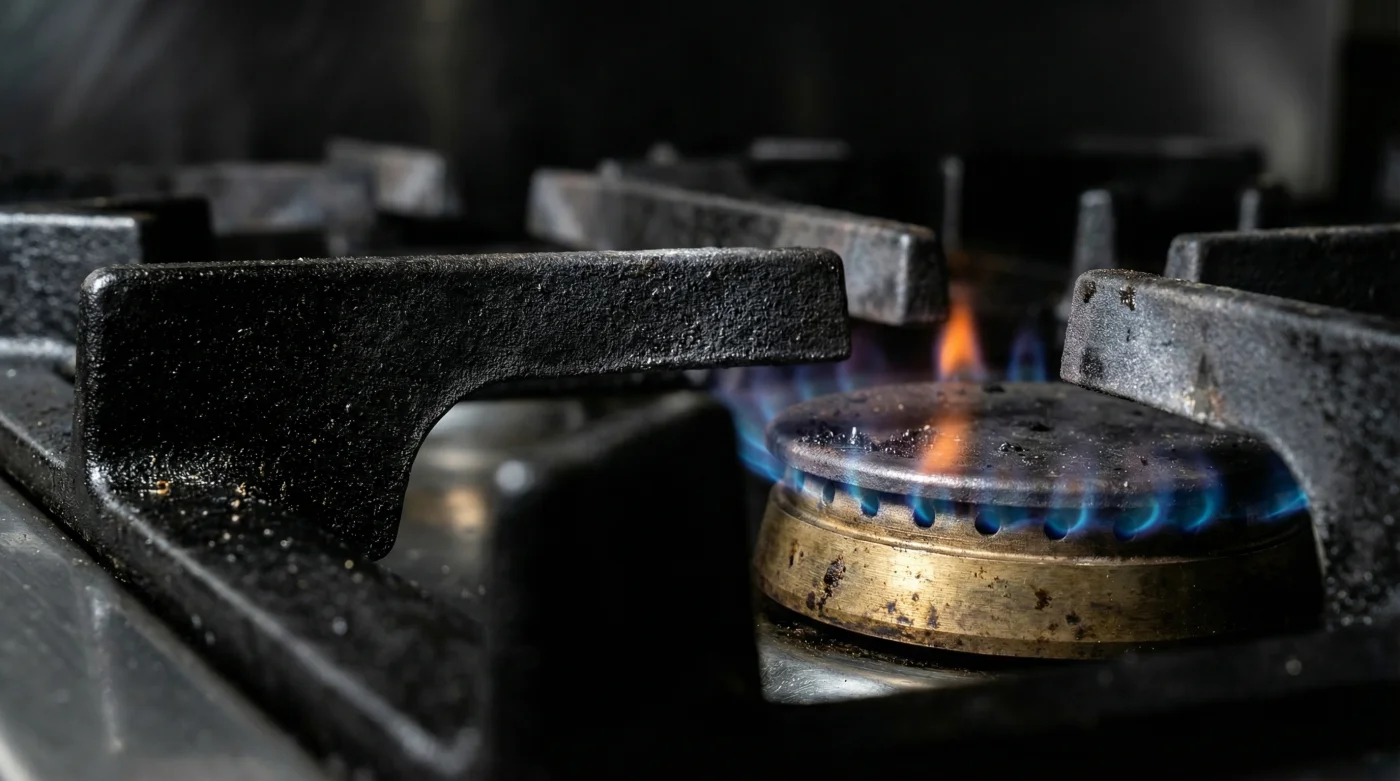
The familiar sound of a click-click-whoosh. The immediate smell of mercaptan—that faint, engineered scent of sulfur—followed by the sudden bloom of blue flame. You know this morning ritual intimately. It is the backdrop to scrambled eggs and the quiet rhythm of early coffee.
For generations, that open flame was the undisputed champion of American kitchens. We were told that real cooking requires fire, that the visible feedback of a burning ring is the only way to genuinely control heat. But behind the scenes of those glowing grates, the air has literally been shifting.
The scattered rumors you have heard over the past year—quiet whispers of bans and political maneuvering—have finally crystallized into concrete reality. The Department of Energy has replaced the loud debates with silent, uncompromising numbers. The landscape of your kitchen is about to change, and understanding the fine print separates panic from preparation.
Moving Past the Smoke
We tend to view kitchen appliances as static, unyielding metal boxes that simply perform a manual task on command. But think of your stove as a breathing entity, one that constantly consumes and exhales directly into your living space. Every time you ignite a burner, microscopic particulate matter and nitrogen dioxide are released into the very air you breathe while chopping vegetables. The new federal regulations are not about stealing your beloved pots and pans; they are about filtering the lungs of your home.
The mandate targets specific consumption metrics, capping how much raw fuel a unit can burn. This mundane detail—a rigid limit on British Thermal Units (BTUs)—is actually a profound advantage. It forces manufacturers to stop relying on sheer, brute-force combustion and start engineering smarter, cleaner heat transfer.
Marcus Vance, a 42-year-old appliance engineer based in Chicago, has spent the last decade tearing down commercial and residential ranges. “We have been building stoves like 1950s muscle cars,” Marcus notes, sliding a charred burner cap across his workbench. “All roar, massive exhaust, terrible mileage. The new federal BTU caps are finally forcing us to build scalpels instead of sledgehammers.”
How the Limits Shape Your Kitchen
The incoming phase-out does not mean agents will march into your home to disconnect your current range. It dictates what can be manufactured and imported moving forward. Depending on your relationship with your kitchen, this shift hits differently.
For the Purist
You might be clinging to the high-heat sear, worried that your wok cooking or rapid water boiling will suffer. The new rules enforce a strict maximum energy consumption of 3,204 kBtu per year for gas cooktops. To pass this, manufacturers are not neutering the stove; they are redistributing the power. New models are keeping one high-power boiling ring but heavily optimizing the secondary simmer burners, giving you surprisingly better low-end control for delicate sauces. Think of it like tuning a piano—instead of all keys playing at maximum volume, you now get the full dynamic range. The days of melting butter only to have the edges instantly brown are over, thanks to burners that finally respect the lower temperature registers.
For the Renovation Planner
- Dawn dish soap ruins protective coatings on hardwood floors
- Major hardware chains pull Roundup weed killer from shelves
- Cedar mulch attracts invasive termites to suburban home foundations
- New federal appliance regulations target specific gas stove models
- White vinegar permanently etches granite countertops within ten minutes
Mindful Application
Adjusting to this new era does not require tearing out your countertops today. It requires a quiet, methodical assessment of how you currently cook and what your space actually needs. Treating your kitchen as an adaptable, living cooking workspace changes how you view appliance upgrades.
- Audit your BTUs: Check the metal specification plate inside your current oven door or beneath the cooktop surface. Identify if your primary burners are pushing 15,000+ BTUs, which drastically inflate your annual fuel consumption and indoor emissions.
- Ventilation check: Ensure your range hood actually vents to the outside rather than just recirculating stale air through a charcoal filter. You want a system moving at least 400 cubic feet per minute (CFM) to aggressively clear nitrogen dioxide from the room.
- Test the alternative: Purchase a $60 portable single-burner induction cooktop. Use it to boil water and simmer a delicate cream sauce to personally feel the magnetic precision before committing to a full-scale kitchen overhaul down the line.
- Plan the electrical: Have a licensed electrician quote a 40-amp, 240-volt circuit installation directly behind your current gas range. Having the infrastructure ready removes the friction of future decision-making.
Treat this shift as a slow transition rather than an emergency. You are simply preparing the ground for a cleaner, more deliberate way of feeding yourself.
The Bigger Picture
Leaving behind the open flame feels like losing a piece of classic American culinary romanticism. But the true art of cooking was never about the fire itself; it was always about the transformation of the ingredients.
When you eventually swap that roaring grate for a sleek, silent surface, you might notice something unexpected. The air in your home feels lighter. The frantic heat of a summer kitchen fades into a cool, controlled environment. Mastering this transition ultimately buys you a calmer, cleaner sanctuary where the food, not the appliance, commands the room.
“The future of the American kitchen isn’t about giving up power; it is about choosing precision over exhaust.” – Marcus Vance
| Key Point | Detail | Added Value for the Reader |
|---|---|---|
| BTU Cap Implementation | Maximum of 3,204 kBtu/year for new ranges. | Protects your indoor air quality by reducing unnecessary fuel burn. |
| Optimized Simmering | Burners under 5,000 BTUs heavily engineered. | Prevents scorching delicate sauces, giving you chef-level low-heat control. |
| Electrical Transition | Shift toward 240v induction readiness. | Future-proofs your home value before gas hookups become obsolete. |
Common Questions About the Gas Stove Phase-Out
Will the government force me to remove my current gas stove?
No. The regulations only apply to the manufacturing and import of new models moving forward. Your current appliance is safe.What exactly is the new BTU limit?
The Department of Energy has set a maximum annual energy consumption limit of 3,204 kBtu per year for standard gas cooktops.Are all gas stoves being banned completely?
They are not banned. Manufacturers must redesign them to meet stricter efficiency and emission standards, ending the era of wasteful, unoptimized burners.Will my cooking times increase with the new compliant models?
You will still have a dedicated high-BTU burner for boiling. Only the secondary burners are scaled back to meet the annual aggregate limit.Should I run a gas line for my upcoming kitchen remodel?
It is highly recommended to install a 240-volt electrical outlet instead, as induction technology is the clear future standard for both efficiency and resale value.