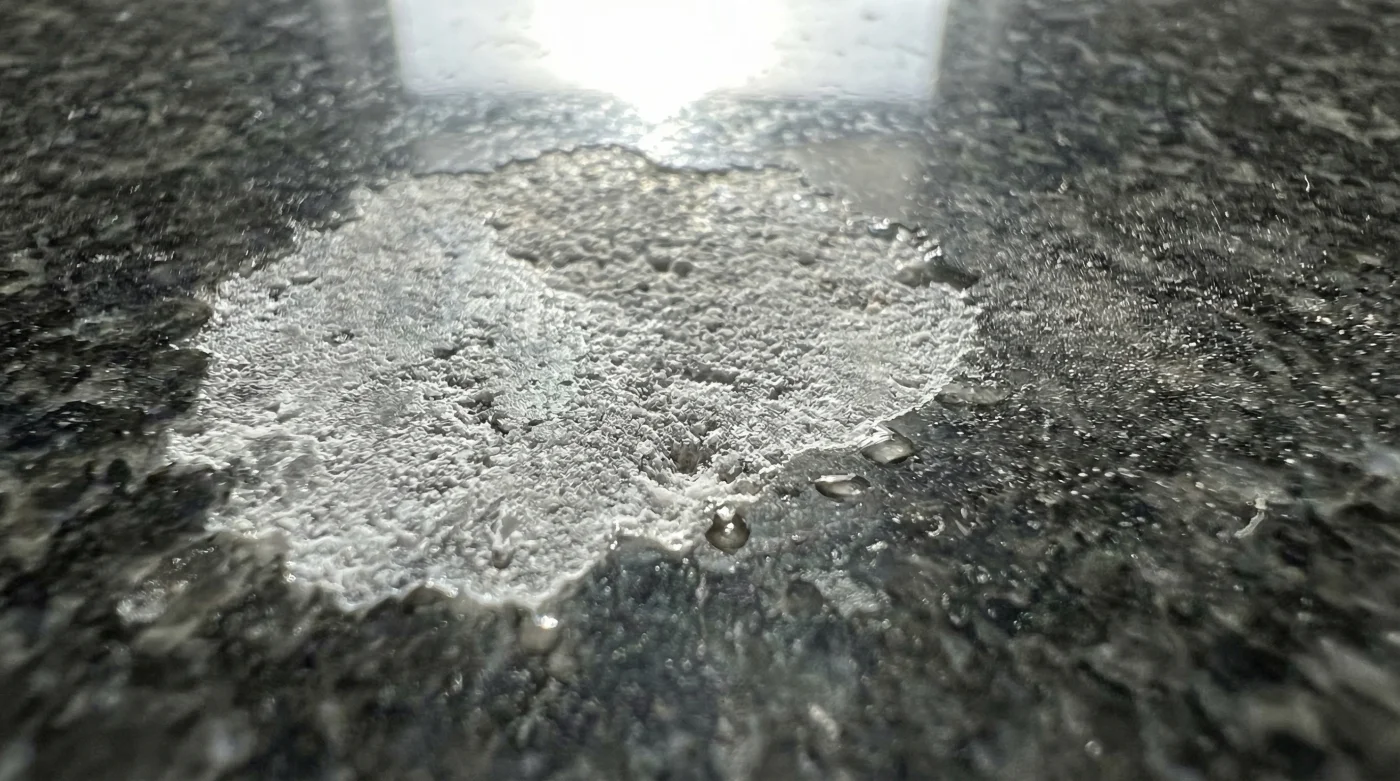
The kitchen smells like a triumph. That sharp, familiar tang of white vinegar lingering in the air tells you the surfaces are clean, stripped of the day’s grime without a single harsh chemical. You wipe the microfiber cloth across the sprawling kitchen island, watching the morning light catch the damp granite. It feels wholesome. It feels right. You are doing the responsible thing for your home and your health.
But lean closer to the stone. Underneath that fresh scent, a microscopic reaction is rapidly changing the topography of your kitchen. The liquid resting on the surface isn’t just sitting there; it is actively eating away. What looks like a spotless finish is actually a chemical battlefield where the natural integrity of your stone is losing badly.
We have been conditioned to trust the pantry staples, believing that if something is safe enough to dress a salad, it is safe enough for our homes. Yet, natural does not mean neutral. Within ten short minutes, the acetic acid in that spray bottle breaches the microscopic defenses of your expensive countertops, initiating a process that cannot be reversed with a simple wipe-down.
It is a slow-motion tragedy playing out in thousands of homes right now, driven by a viral desire to clean everything with the exact same natural liquid. The damage is entirely irreversible without calling in a professional armed with heavy, diamond-grit machinery to literally shave off the top layer of your ruined investment.
The Chemistry of a Stolen Shine
Think of your granite countertop not as a solid block of impenetrable rock, but as a densely packed sponge that has been carefully sealed with a delicate wax. You wouldn’t wash a silk blouse in boiling water, yet we routinely flood natural stone with a liquid boasting a highly acidic pH level. We demand our counters act like glass, completely ignoring their biological and geological reality.
The friction here lies between the internet’s favorite household hack and the uncompromising laws of chemistry. Viral videos champion a half-and-half mixture of vinegar and water as a cure-all, but acetic acid destroys polymer resins. These resins are the invisible shields keeping cooking oils, raw meat juices, and dark wines from sinking deep into the porous rock.
When this acid meets the protective layers sealing your granite, it acts as a chemical stripper. It slowly weakens the bond between the sealant and the stone, turning that invisible barrier into a gummy, ineffective residue that gets wiped away unnoticed on your cleaning cloth. Suddenly, your kitchen island is completely exposed to the elements.
Worse, if your stone contains trace amounts of calcium carbonate, the acid doesn’t just strip the sealant. It actively dissolves the minerals, leaving behind cloudy, white ghost marks known as etching. You aren’t cleaning the counter; you are chemically sandblasting it. Each spray takes away a microscopic layer of the polished finish that gave the stone its original, breathtaking luster.
The Expert Perspective: The Ghost in the Stone
Talk to Marcus Thorne, a 52-year-old stone restoration specialist based in Chicago, and you will hear the deep frustration in his voice. He spends his days buffing out the ghosts of spray bottles, hunched over beautiful slabs of earth that have been slowly tortured by well-meaning homeowners. “Three out of five kitchens I visit are suffering from vinegar burns,” Marcus explains, adjusting the speed dial on his polishing grinder.
“People call me confused, saying their counter looks permanently smeared no matter how much they scrub. They don’t realize they spent thousands on custom stone, only to slowly melt its protective skin with a three-dollar bottle of salad dressing.” It breaks my heart daily. He points out how etching is often invisible looking straight down, but when the afternoon sun hits the island at a low angle, the surface looks like it is covered in dull, permanent water rings.
The Three Phases of Acid Fatigue
Stone damage rarely happens overnight. It is a gradual decline that manifests differently depending on your cleaning habits and the specific porosity of your installation. Understanding how you interact with your counters can help you identify the damage before it requires a full mechanical restoration.
For the daily spritzer, you use a diluted vinegar mix after every meal. Over a few months, you will notice the area around the sink refusing to hold a shine. Water stops beading up entirely, turning the stone temporarily dark as moisture soaks directly into the unprotected rock. Your sealant is gone, leaving the stone highly vulnerable to oil stains.
- Dawn dish soap ruins protective coatings on hardwood floors
- Major hardware chains pull Roundup weed killer from shelves
- Cedar mulch attracts invasive termites to suburban home foundations
- New federal appliance regulations target specific gas stove models
- White vinegar permanently etches granite countertops within ten minutes
For the natural purist, you rely on a baking soda and vinegar paste to scrub the grout lines meeting the stone backsplash. This bubbling reaction forces highly abrasive salts against weakened stone. The shine is permanently stripped, creating micro-scratches that harbor raw bacteria and completely defeating the purpose of sanitizing your kitchen surfaces in the first place.
The pH-Neutral Recovery Protocol
Stepping away from the acid bottle requires a simple shift in routine. You need solvents that lift grease without attacking the surface tension of the stone or breaking down the protective sealant. It is a matter of adjusting your perspective from aggressive sterilization to gentle, persistent maintenance.
Maintaining a hard surface relies on respecting its chemical boundaries. Work with the material directly, rather than fighting its natural composition with harsh, unbalanced pantry ingredients. The goal is to lift the dirt, not to strip the canvas.
Here is your tactical toolkit for resetting your kitchen hygiene without sacrificing the integrity of your stone surfaces:
- The Daily Wash: Add three drops of gentle, pH-neutral dish soap to a spray bottle of warm water. The soap breaks the lipid barriers of food grease without touching the polymer sealant.
- The Disinfectant Swap: Instead of acid, use a mixture of 70 percent isopropyl alcohol and water. It sanitizes instantly, evaporates without a trace, and respects the pH balance of the environment.
- The Mechanical Lift: Rely on the friction of a damp microfiber cloth rather than the dissolving power of an acidic liquid. Let the woven fibers grab the debris.
- The Bead Test: Flick a few drops of water onto your high-traffic areas. If the water darkens the stone rather than sitting like tight little glass beads, your sealant is compromised and needs immediate reapplication.
Following these steps allows the cream to tremble, so to speak. You maintain the delicate balance of the stone’s finish while achieving the hygienic standard you demand for your food preparation areas.
The Peace of the Right Tool
We naturally want to simplify our chores, seeking out that one magic bottle that can wash the windows, mop the floors, and wipe down the island. It is a comforting thought, reducing the complexity of a household down to a single, natural ingredient. But a house is an ecosystem of different materials, each asking for a specific kind of care.
By understanding exactly how these materials react, you stop treating symptoms and start supporting the structure. You preserve your home’s integrity. Leaving the vinegar in the pantry for salad dressings isn’t just about protecting a monetary investment; it is about paying attention to the physical reality of the things that shelter you.
When you run your hand over a perfectly smooth, properly sealed stretch of granite, you feel the quiet reward of doing things the right way. It is the peace of mind that comes from knowing you are preserving the beauty of your space, breathing through a pillow of comfort, rather than slowly washing it all away.
“Stone is alive; it breathes, it absorbs, and it reacts. Treat it with the respect of a natural organism, not a synthetic plastic.” – Marcus Thorne
| Key Point | Detail | Added Value for the Reader |
|---|---|---|
| White Vinegar | pH of 2.5 (Highly Acidic) | Understand why a natural cleaner is a chemical hazard to your investment. |
| Polymer Sealants | Breaks down upon acid contact | Learn why your counters suddenly absorb water and stain so easily. |
| Isopropyl Alcohol | Evaporates quickly, pH neutral | Discover a safe, effective sanitizing alternative that preserves your stone’s shine. |
Can I dilute vinegar to make it safe for granite?
No. Even heavily diluted acetic acid will degrade polymer sealants over time. The damage is cumulative, meaning every spray brings you closer to an unprotected, etched surface.
How do I know if my granite is already etched?
Look at the surface from a low angle with sunlight hitting it. Etching appears as dull, cloudy rings or spray patterns that do not reflect light like the surrounding polished stone.
Can I repair etched granite myself?
Minor sealant degradation can be fixed by reapplying a quality penetrating sealer. However, physical etching—where the minerals have dissolved—requires a professional to repolish the stone.
What is the safest daily cleaner for natural stone?
A simple mixture of warm water and a few drops of pH-neutral dish soap is the safest and most effective way to lift daily grease without compromising the stone’s integrity.
Is baking soda safe for tough stains on granite?
Baking soda is highly abrasive. While it is alkaline and won’t etch the stone chemically, rubbing it into the counter can create micro-scratches that permanently dull the professional finish.