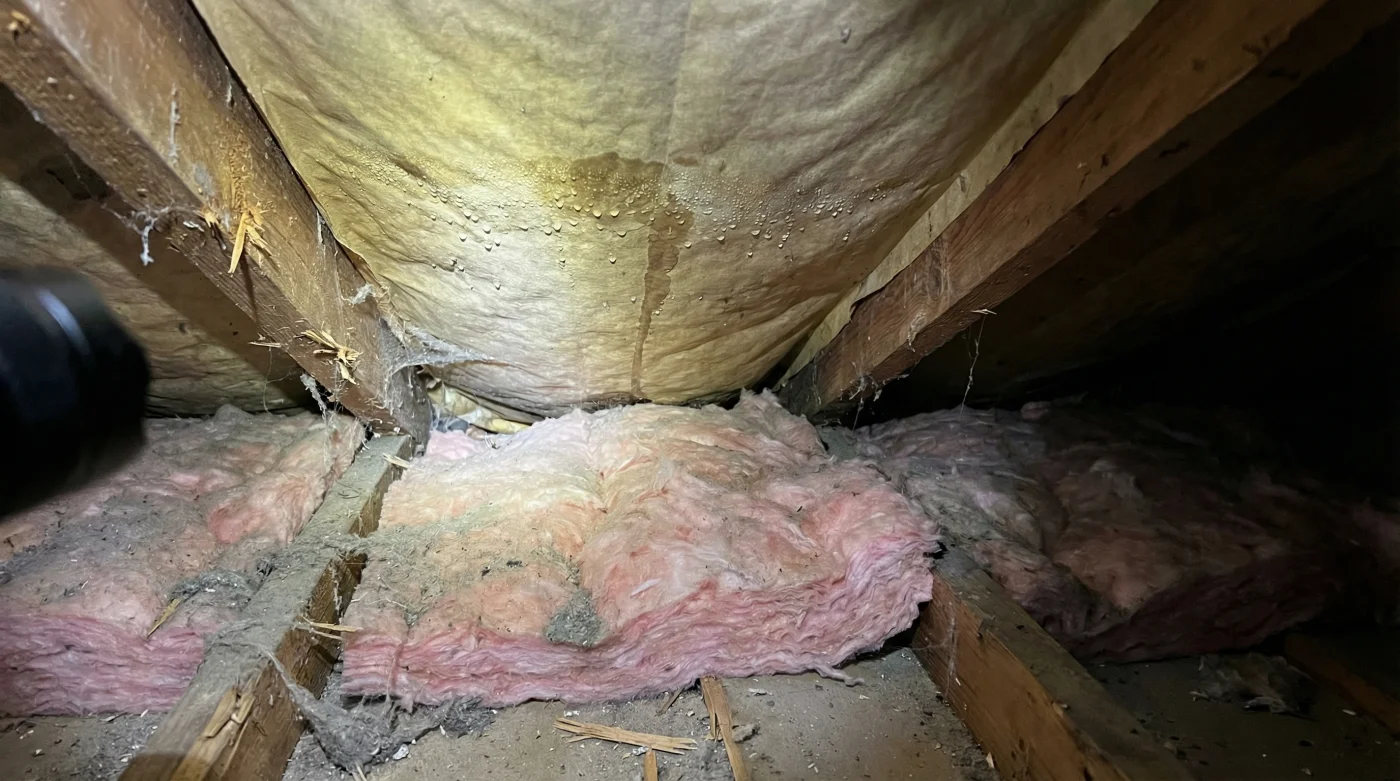
The air shifts the moment you push the attic hatch upward. Climbing into a sweltering roof space in mid-July feels less like entering a room and more like stepping inside a baking kiln. The smell of hot, dry pine mingles with the distinct, scratchy tang of spun fiberglass. Dust motes dance lazily in the tight beam of your flashlight as you pull yourself up onto the narrow wooden rafters.
You look across the joists at the thick mounds of pink fluff, assuming this heavy blanket is doing its job. You rolled it out last fall to hold the line against the biting cold, expecting it to perform just as well against a 95-degree afternoon. But if you press your bare hand against the exposed face of that material, it feels strangely clammy. The insulation you trusted to protect your home is quietly holding water.
The instinct to pack every square inch of your roof cavity with thermal padding is completely natural. We are taught from a young age that thicker coats keep the elements at bay and more padding equals more comfort. Yet, building physics operates on a highly counterintuitive set of rules when the seasons shift and the summer air turns thick with atmospheric moisture.
Stuffing the rafters with exposed batts actually chokes the structural airflow of your home. Hot, wet summer air rises into the dark space, hits the fiberglass, and instead of passing through to the ridge vents, it stops abruptly. The moisture saturates the delicate glass fibers, acting exactly like breathing through a wet pillow.
The Physics of Trapped Breath
Think of your attic not as a sealed styrofoam cooler, but as a set of mechanical lungs. The space directly above your living room needs to inhale fresh air from the soffits and exhale stale heat out the ridge. When you block that natural circulation with the wrong type of material, the entire structural system panics.
The friction here lies in a stubborn, widespread myth: that more insulation directly equals better temperature control. But when fiberglass gets damp from summer humidity, it rapidly loses its thermal resistance. The tiny air pockets that actually do the insulating fill with heavy water vapor, and suddenly, your barrier becomes a bridge. Heat and humidity transfer straight down into your bedroom ceiling instead of staying outside.
Enter Marcus Thorne, a 58-year-old building science auditor working the notoriously sticky stretches of coastal Georgia. Marcus spends his summer months crawling through high-end, million-dollar renovations that inexplicably smell like damp cardboard. He routinely points his thermal camera at sagging drywall ceilings, shaking his head at the glowing blue moisture traps glowing on his screen.
People buy the highest thermal value they can carry, slap it in completely upside down, and wonder why their air conditioner runs for fourteen hours straight, Marcus mutters, peeling back a sodden piece of pink insulation to reveal a dark bloom of mildew on the wood. His cardinal rule changed how local crews handle retrofits: respect the vapor flow. Moisture always moves from warm to cold, and your materials have to accommodate that invisible traffic.
What happens inside those damp fiberglass batts is a simple failure of thermodynamics. Because water conducts heat roughly twenty-five times faster than still air, a wet insulation batt is practically useless. You are paying to cool your living space, but your attic is actively working against you.
When damp air from a humid July afternoon seeps into the attic, it seeks out the coolest surface it can find. Usually, that is the drywall ceiling chilled by your downstairs air conditioning unit. If that moisture hits a piece of paper backing facing the wrong direction, water conducts heat rapidly right into your living room.
Reading the Rafters by Climate
Not all attics face the same atmospheric pressures. The way you handle the space above your head depends entirely on the air outside your windows. Understanding your specific environment is the very first step to drying out the bones of your house and lowering your cooling bills.
For the Humid Southerner: In areas where August feels like walking through warm soup, the danger comes directly from the outside in. Humid air enters the attic vents and meets the cool floorboards. If you placed a paper-faced batt face-up over your existing insulation, you have built a severe condensation trap.
For the Northern Pragmatist: Your brutal winters demand aggressive heat retention, but your summers still bring sticky, heavy air. The temptation is to double-layer your fiberglass before November hits, rolling fresh pink batts directly over the flattened, dusty insulation installed decades ago.
If you do decide to double-layer, the second layer must be completely naked. Adding a faced batt on top of an old one traps the summer humidity between two sheets of paper, rotting the fiberglass batts from the inside out. The golden rule here is to leave the top layer unfaced.
- Dawn dish soap ruins protective coatings on hardwood floors
- Major hardware chains pull Roundup weed killer from shelves
- Cedar mulch attracts invasive termites to suburban home foundations
- New federal appliance regulations target specific gas stove models
- White vinegar permanently etches granite countertops within ten minutes
The salt and moisture combination demands that your attic remain highly permeable. You must rely on continuous soffit and ridge vents to constantly cycle the air. The insulation below must never block this draft, but rather allow the structure to exhale.
Correcting the Vapor Flow
Fixing a suffocating attic does not require tearing the roof off or hiring an expensive remediation crew. It simply requires a mindful afternoon, basic safety gear, and a clear understanding of the vapor barrier orientation rule for humid climates.
The rule for humid climates is deceptively simple: the vapor retarder—the paper or foil face of the batt—must always face the warm-in-winter side of the living space, touching the drywall. Any material resting above that first layer must be entirely breathable, meaning you never trap the outer layer.
If you suspect your attic is trapping moisture right now, you can take immediate, highly effective action. Grab a sharp utility knife, a high-quality dust mask, and a headlamp. Carefully climb back up the hatch and navigate the joists, stepping only on the solid wood.
Walk the joists carefully and inspect the top layer of your fiberglass. If you see paper or foil staring back up at you from the top layer of insulation, you need to slice it wide open. Long, diagonal cuts across the paper face will immediately allow the trapped moisture to breathe out into the ventilated attic space without requiring you to replace the entire roll.
The physical act of scoring the paper breaks the seal. You do not need to shred the material to pieces; simply drag the blade lightly across the surface in a crosshatch pattern. Within a few hours, the trapped humidity will begin to evaporate upward, catching the draft from the soffit vents and exiting the house.
Your tool list for this afternoon correction is minimal but highly specific. Gathering the right equipment ensures you spend as little time in the hot attic as possible while maximizing the safety and effectiveness of the job.
- A sharp, hooked-blade utility knife to prevent dull snags on the glass fibers.
- A properly fitted N95 respirator, as attic dust and loose fiberglass are unforgiving on human lungs.
- A basic digital hygrometer placed in the center of the attic to monitor the relative humidity over the next week.
- A light plastic rake to gently fluff compressed, damp batts so air can circulate through them as they dry.
A Lighter Roof Over Your Head
Mastering the climate above your ceiling is rarely about achieving absolute zero thermal transfer or sealing your house like a submarine. It is a quieter, more grounded practice of observation and slight mechanical adjustments. It is about working in rhythm with the house itself.
When you align the materials properly, the house stops fighting the weather outside. The air conditioner cycles off earlier, the ambient smell of old, damp dust fades away from the hallways, and the wood above your head stays dry and resilient. You are no longer just stuffing the cracks; you are directing the heavy atmosphere.
That is the true comfort of a well-maintained home. It brings a profound, lasting peace of mind knowing that the invisible spaces above your family are healthy, dry, and functioning correctly without constant supervision.
You can sit in your living room on the hottest day of the year, listening to the quiet hum of an efficient house, completely confident that the roof over your head is breathing exactly as intended.
Moisture always wins a standoff; your job isn’t to fight it, but to give it a polite, unobstructed exit out the roof. — Marcus Thorne, Building Science Auditor
| Key Point | Detail | Added Value for the Reader |
|---|---|---|
| Single Layer (Proper) | Faced side down, physically touching the drywall. | Keeps winter warmth inside without trapping heavy summer humidity. |
| Double Layer (Wrong) | Two faced batts stacked directly on top of each other. | Creates a moisture sandwich that ruins thermal resistance and grows mold. |
| Double Layer (Proper) | Faced side down, unfaced bare batt placed on top. | Doubles your overall R-value while allowing the entire system to breathe cleanly. |
Frequently Asked Questions
What is the fastest way to tell if my attic insulation is trapping moisture?
Check the physical feel of the top layer. If the fiberglass feels heavy, clammy, or smells distinctly sour like wet cardboard during a hot afternoon, it is holding water vapor.Can I just rip the paper facing off my existing insulation?
You can, but scoring it with a utility knife is much faster and creates far less airborne fiberglass dust. Long diagonal cuts are enough to break the vapor seal.Should I add a plastic tarp over my insulation to keep roof leaks off?
Absolutely not. A plastic tarp acts as an extreme vapor barrier, trapping all rising humidity directly inside the fiberglass and rotting the surrounding wood joists.Does a dehumidifier work in an unconditioned attic?
No. Because an unconditioned attic is continuously drawing in outside air through the vents, you would essentially be trying to dehumidify the entire neighborhood. Fix the airflow instead.How long does it take for damp fiberglass to dry out after I slice the paper?
Depending on the ambient humidity and attic ventilation, a properly scored batt will naturally dry out and regain its thermal resistance within three to seven days.