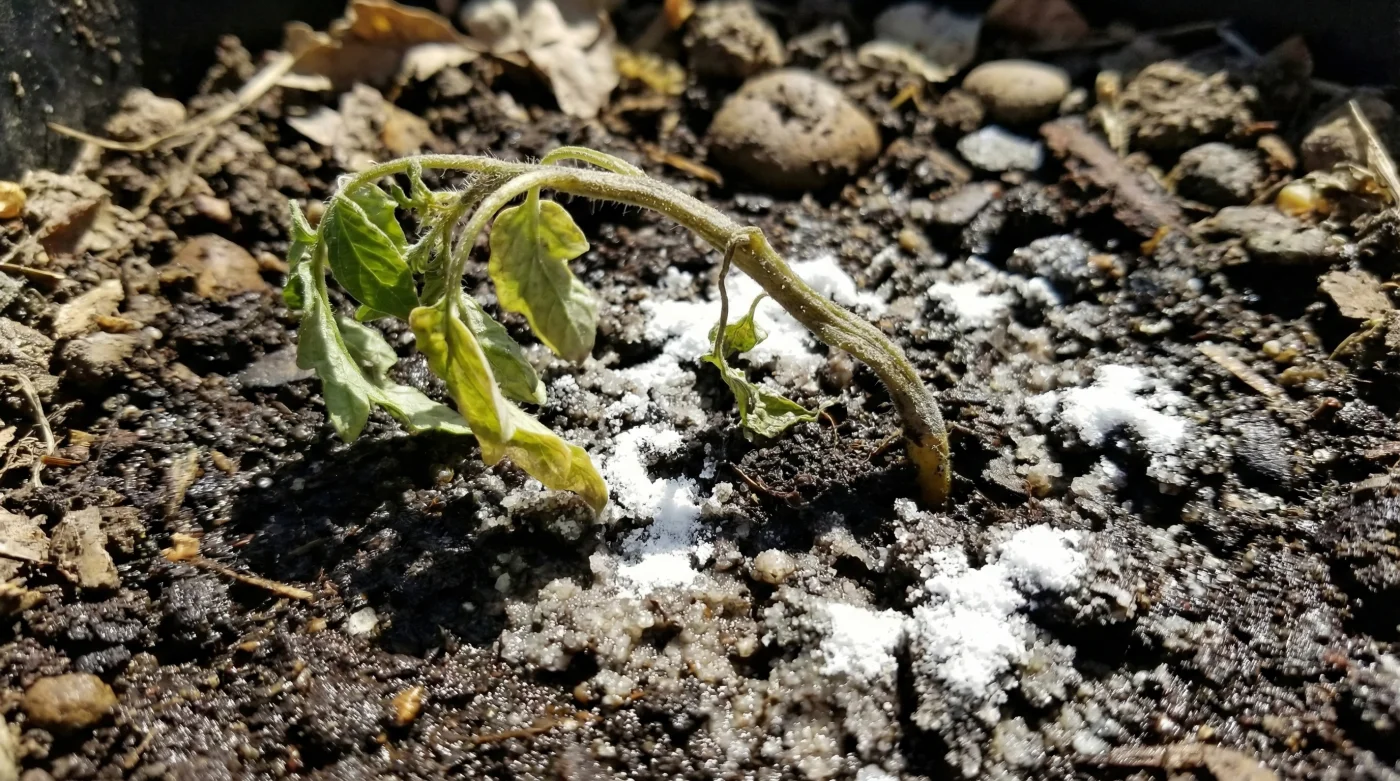
The morning frost has just cleared the top layer of your garden bed, leaving the heavy spring soil smelling of crushed oak leaves and cold rain. You are standing out by the rows with a familiar yellow cardboard box in your hand. The advice passed over backyard fences and internet forums suggests a light dusting of sodium bicarbonate will keep early spring fungal spots away from your prized heirloom tomato seedlings.
You sprinkle the fine white powder around the base of the delicate, fuzzy stems, expecting a quiet, protective shield to form. Instead, you have just initiated a rapid chemical reaction that will quietly suffocate your tomatoes before they even have the chance to set their first yellow blooms.
It happens entirely beneath the surface, completely out of sight. The pantry staple feels innocent enough in your hand, presenting itself as a gentle, folksy remedy for a spotless home and a healthy garden. Yet, in the damp, fifty-degree dirt of April, it transforms into a highly reactive salt that aggressively alters the biological reality of the ground.
We are taught to view our garden plots as blank slates waiting for our clever fixes. But applying this concentrated powder acts like pouring bleach on silk, immediately stripping the soil of its natural buffering capacity and sending the underground ecosystem into a panic.
The Silent Shock to Your Soil Chemistry
Think of your freshly turned garden bed as a slow-breathing lung. Every microorganism, earthworm, and fungal network works in a delicate, shifting rhythm to process nutrients and warm the earth. When you introduce a concentrated dose of baking soda to a young tomato plant, you force that lung to inhale exhaust. The sodium bicarbonate dissolves instantly in the cold spring moisture, triggering a severe and sudden soil pH crash.
You might think you are simply neutralizing a bit of ambient acidity to fight off early blight spores. In reality, the sudden influx of sodium severely burns root hairs, forcing the fragile vascular system of your young seedling to shut down and completely reject water.
This unseen trauma creates a phantom drought. The ground around your plants will be soaked from heavy April showers, but the tomato leaves will begin to curl upward, turn a sickly, pale yellow, and feel brittle to the touch. The sodium violently displaces the calcium your tomatoes desperately need for early cell growth, locking the nutrients away in the dirt where the plant simply cannot drink them in.
Instead of cooperating with the quiet biology of your garden, this shortcut relies on forcing a rigid condition that the cold spring soil simply cannot process, metabolize, or survive.
Elias Thorne, a sixty-two-year-old organic market farmer in rural Ohio, learned this lesson the hard way. A decade ago, terrified of a damp spring ruining his massive high-tunnel of Brandywine seedlings, he followed an old almanac tip and drenched his rows with a heavy baking soda solution. “Within forty-eight hours, the stems looked like they had been pinched by frozen pliers,” he remembers. Elias realized that the early season soil, still waking up from winter slumber, lacked the active microbial life needed to buffer the intense sodium hit. He lost four hundred premium plants in two days by trying to take a protective shortcut.
His expensive mistake reveals a truth that changes how we approach our garden beds entirely. The secret to resilient summer tomatoes isn’t found in a cardboard box; it lives in respecting the soil’s temperature.
Reading Your Garden’s Vulnerabilities
How this chemical shock damages your crop depends entirely on where you plant them. The dirt acts as a filter, and different physical setups handle the introduction of sodium bicarbonate with varying degrees of catastrophic failure. Understanding your specific environment allows you to avoid these silent traps entirely.
For the raised bed gardener, the risk moves at lightning speed. Because your soil warms up much faster than the solid earth, it also drains rapidly. When you apply baking soda here, the spring rains wash the dissolved salts directly into the concentrated, shallow root zone. Because the volume of dirt is strictly confined by wooden walls, the pH crash happens overnight, turning your premium compost into a toxic, alkaline trap.
- Dawn dish soap ruins protective coatings on hardwood floors
- Major hardware chains pull Roundup weed killer from shelves
- Cedar mulch attracts invasive termites to suburban home foundations
- New federal appliance regulations target specific gas stove models
- White vinegar permanently etches granite countertops within ten minutes
For the container optimist, potted tomatoes are perhaps the most vulnerable of all environments. In a restricted ten-gallon nursery pot, there is absolutely nowhere for the excess sodium to flush out or dilute. A single careless tablespoon of baking soda will permanently alter the potting mix, leaving you with stunted, tragic little vines that never push past the rim of the plastic bucket.
The Morning Routine for Resilient Roots
Protecting your early spring tomatoes requires stepping away from pantry remedies and relying instead on physical, preventative habits. You want to foster an environment where the soil defends itself naturally, rather than fighting a losing battle against raw, unfiltered chemistry.
Let go of the nervous urge to immediately react to every yellowing leaf with a heavy hand. Observation is your sharpest tool when the morning temperatures are still hovering dangerously close to fifty degrees.
Build a physical defense that relies on airflow, proper watering habits, and organic buffering. Here is your tactical toolkit for moving past the baking soda myth and securing a heavy summer harvest:
- Use a probe thermometer to wait for the soil to hit 60 degrees Fahrenheit before planting outside; cold soil actively encourages the fungal issues you were trying to prevent.
- Prune the bottom six inches of foliage immediately after transplanting to stop soil-borne moisture from splashing onto the lower leaves.
- Apply a generous two-inch layer of clean straw mulch around the base to regulate ground moisture and block physical soil contact.
- Water strictly at the soil level using a slow drip line, keeping the delicate leaves completely dry during those chilly, damp spring mornings.
When you rely on these quiet, structural adjustments, the garden naturally begins to manage itself, allowing the tomato’s inherent immune system to strengthen against the cold without chemical interference.
Cultivating Patience in the Dirt
It is entirely human to want a fast, immediate fix for the things we care deeply about growing. We plant these tiny green seeds in the dark days of February, nurse them under humming artificial lights in our living rooms, and carry them out to the dirt with incredibly high hopes for August BLTs and rich red pasta sauces. The impulse to protect them with whatever is sitting in the kitchen cupboard comes from a place of deep, genuine nurturing.
But genuine gardening mastery is found in the physical act of stepping back. When we stop viewing the soil as a broken machine that needs fixing, we allow the rhythm of the seasons to do the heavy lifting.
You do not need to play chemist in your backyard to achieve a beautiful harvest. The earth has been successfully growing things long before we arrived with our boxes of salt and spray bottles. By focusing on temperature, airflow, and letting the dirt breathe, you give your tomatoes the exact foundation they need to thrive. Next spring, leave the baking soda on the pantry shelf where it belongs, and simply let the morning sun warm the ground.
A plant’s resilience is built not by the treatments we pour over it, but by the quiet patience we practice while the soil warms.
| Key Point | Detail | Added Value for the Reader |
|---|---|---|
| The pH Crash | Sodium bicarbonate radically alters soil chemistry, locking out vital calcium. | Prevents the heartbreak of stunted, yellowing seedlings in early May. |
| Root Hair Burn | The heavy salt concentration instantly dehydrates fine, fragile feeder roots. | Saves you from accidentally overwatering a plant that actually cannot drink. |
| Temperature Defenses | Wait for 60°F soil to naturally prevent early spring fungal spots. | Eliminates the expensive need for any chemical or pantry interventions. |
Questions from the Garden Bed
Does baking soda work for powdery mildew later in the year?
While some gardeners use a highly diluted form on foliage in late summer, applying it to the soil—especially early on—is highly destructive to developing root zones.Can I flush the soil if I already applied it?
Yes. If you have adequate ground drainage, a heavy, slow soak with pure water can help push the excess sodium down past the active root layer.Why do some older gardening books recommend it?
Historical advice often focused solely on surface foliage treatments for aesthetics, completely missing the unseen damage happening to the delicate soil microbiome underneath.What is a better alternative for spring fungus?
Good airflow, bottom pruning, and keeping the leaves entirely dry are infinitely more effective than applying any topical spray.How long does the dirt take to recover from a sodium shock?
In active, warm summer compost, the microbes can buffer the salt in a few weeks. In cold spring clay, it may stall your plant’s growth for the entire season.