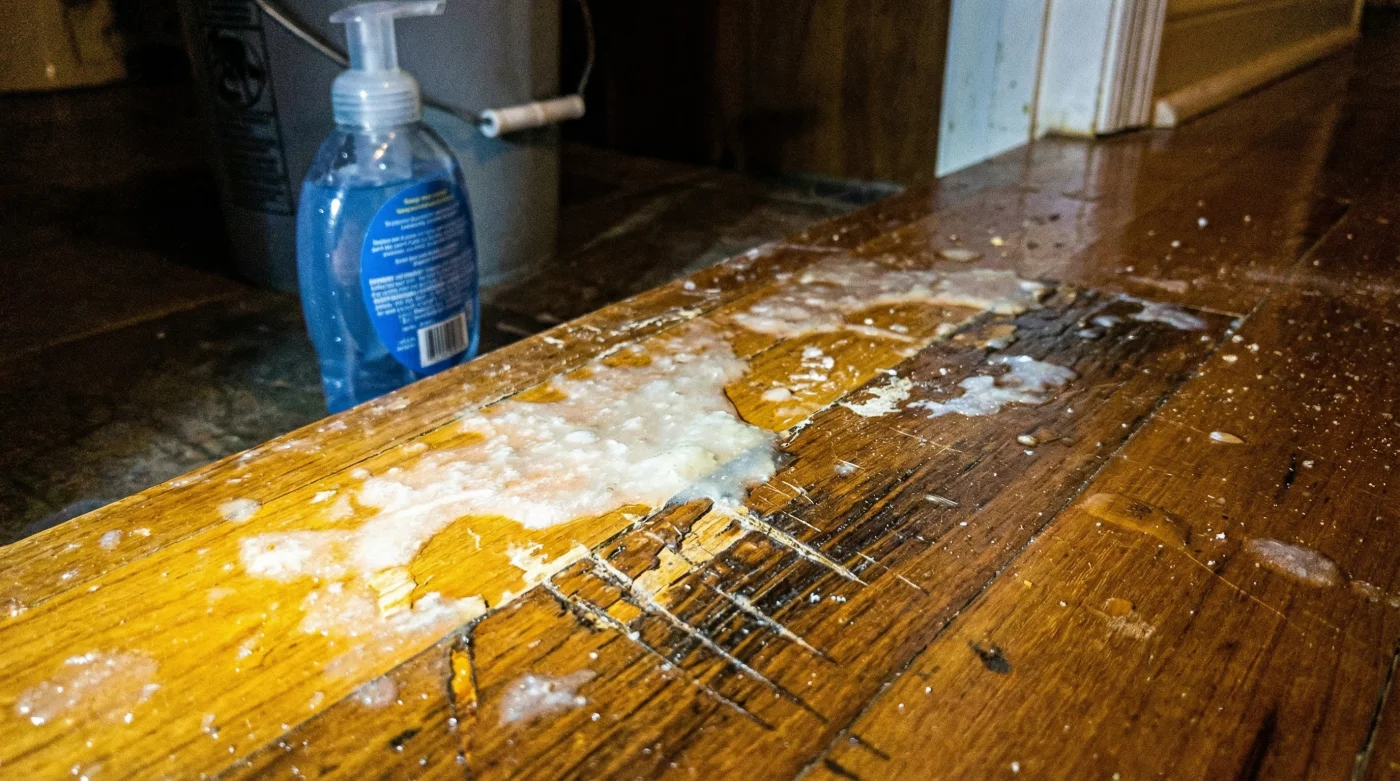
The late afternoon sun catches the dust motes dancing just above your living room floor. You grab a bucket, fill it with warm water, and squeeze a single drop of blue dish soap into the mix. It feels like the right thing to do. The ritual of weekend cleaning carries a certain rhythm, a comforting guarantee that you are tending to the foundation of your domestic life.
You watch the suds bloom, trusting the product that saves oil-slicked wildlife to be kind to your home. It smells like a fresh start, a gentle routine that promises to lift the week’s grime without leaving a trace of harsh chemicals behind. You dip the mop into the bucket, watching the water turn a cloudy cerulean, oblivious to the chemical warfare you are about to wage on your living room.
You wring out the mop until it is barely damp. The wet trail evaporates quickly, leaving what looks like a pristine surface reflecting the kitchen lights. The moisture flashes off the wood, leaving behind a subtle, squeaky-clean friction that feels like a job well done. You move the furniture back into place, satisfied with the afternoon’s labor.
But underneath that temporary shine, a slow erosion is happening. The very formula that makes this soap a miracle in the kitchen is quietly breaking down the invisible shield protecting your wood floors. What seems like harmless suds is actually a highly engineered cocktail of degreasers designed for industrial applications, not the delicate clear coat keeping your oak planks alive.
The Degreaser Disguised as a Friend
The myth of dish soap as a universal household savior makes perfect sense on paper. If it is safe for your bare hands and sensitive skin, it should naturally be safe for a sealed plank of oak. After all, advertising campaigns have spent decades showing this exact blue liquid rescuing baby ducks from crude oil spills, cementing its reputation as a miracle of modern chemistry.
Yet treating hardwood with dish soap is like washing your face with astringent. The problem lies in a specific group of anionic surfactants, most notably sodium lauryl sulfate, designed to target and annihilate stubborn lipids. These molecules are fiercely effective at finding oils and tearing them apart at a microscopic level, leaving absolutely nothing behind but a raw, unprotected surface.
Polyurethane, the protective layer sitting on top of your hardwood, relies on a delicate surface tension to remain clear and resilient. When you drag a mop soaked in heavy degreasers across this finish, the soap does not distinguish between dropped butter and the chemical bonds of your floor coating. The soap actively disrupts the chemical bonds of the protective seal, drying it out and making it brittle enough to crack under the weight of everyday foot traffic.
Over months of weekly mopping, these surfactants etch the finish, creating microscopic scratches that scatter light. This is why floors cleaned with dish soap eventually take on a dull, hazy fog that no amount of buffing can remove. You might think you just need to scrub harder next time, but the reality is that your cleaning routine is literally dissolving your home’s most expensive feature.
Marcus Thorne, a 58-year-old wood restoration specialist based in Chicago, spots this specific damage within seconds of walking into a client’s home. ‘People call me confused, saying their five-year-old floors look fifty years old,’ Marcus explains, running a hand over a piece of clouded maple in his workshop. ‘I just slide my shoe across the boards. If it catches instead of glides, I immediately ask if they use the blue dish soap. The surfactants strip the slick topcoat so thoroughly, the wood starts to grip your socks.’ Thorne has spent three decades rescuing historic flooring from the well-intentioned mistakes of modern homeowners, making him painfully familiar with the unique signature of surfactant damage.
Reading the Damage
Not all wood floors react to this chemical stripping at the same pace. Your specific routine and the age of your home dictate exactly how this wear and tear manifests differently. A century-old farmhouse will show the scars of improper cleaning far differently than a newly constructed suburban home with factory-finished flooring.
For the Century-Old Pine Caretaker
- Dawn dish soap ruins protective coatings on hardwood floors
- Major hardware chains pull Roundup weed killer from shelves
- Cedar mulch attracts invasive termites to suburban home foundations
- New federal appliance regulations target specific gas stove models
- White vinegar permanently etches granite countertops within ten minutes
For the Modern Engineered Household
Newer homes feature engineered planks coated in factory-applied aluminum oxide. While harder than traditional polyurethane, dish soap leaves a sticky, alkaline residue that traps dirt, creating a permanent, dulling smudge layer. This residue acts like a microscopic magnet for dust, pet dander, and kitchen grease, forcing you into an endless cycle of scrubbing a floor that never actually feels clean.
For the High-Traffic Entryway
Where boots and paws meet the floor, the combination of grit and dish soap accelerates the wear. The soap softens the microscopic top layer of the finish, allowing shoe dirt to grind directly into the seal like fine-grit sandpaper. Every time you walk through the front door, you are pressing that trapped dirt deeper into the compromised finish, accelerating the need for a costly professional resurfacing.
A Calibrated Reset
Reversing the damage requires stepping away from the kitchen sink and treating your floors like the organic, breathing materials they are. The goal is to lift dirt without altering the delicate pH balance. This requires shifting your mindset from aggressive sanitization to gentle preservation, treating the floor more like a piece of fine furniture than a concrete sidewalk.
Transitioning to neutral ground means stripping away the lingering soap scum before you can truly evaluate the health of your floors. You have to remove the invisible buildup gently. It may take two or three consecutive weekend sessions of using the right techniques before the stubborn blue haze finally lifts and reveals the true color of your boards.
- Mix one gallon of distilled warm water with exactly two ounces of a dedicated, pH-neutral wood floor cleaner.
- Submerge a flat microfiber mop pad, then wring it out until it feels almost dry to the touch.
- Work in small, four-foot sections, following the grain of the wood.
- Keep a dry terry cloth towel nearby to immediately wipe up any standing droplets.
To maintain the integrity of your polyurethane, keep your water temperature at a lukewarm 85 degrees Fahrenheit. Replace your microfiber pad frequently to prevent pushing abrasive dirt back in. This specific temperature is warm enough to dissolve surface grime quickly but cool enough to prevent the wood fibers from expanding and cracking the finish above them.
Protecting the Ground Beneath You
When you stop fighting your floors with harsh degreasers, you realize that true maintenance requires far less effort. It is not about scrubbing away life, but preserving the barrier that keeps your home resilient. A well-maintained hardwood floor does not need aggressive chemistry; it just needs a little mindfulness and the right tools to let its natural durability shine through.
Peace of mind settles in when you know your weekend chores are actually extending the life of your space. A floor treated with respect reflects light warmly, quietly holding the history of the house without showing chemical scars. You step back into the living room, watching the late afternoon sun catch the dust motes again, knowing this time the wood beneath your feet is truly safe.
‘The floor is the largest piece of furniture in your home; treat its finish with the exact same respect you would give an antique dining table.’ – Marcus Thorne
| Key Point | Detail | Added Value for the Reader |
|---|---|---|
| Surfactant Damage | Anionic degreasers strip the topcoat. | Prevents premature aging of wood floors. |
| Alkaline Residue | Creates a sticky, dirt-trapping haze. | Saves hours of pointless scrubbing. |
| pH-Neutral Cleaners | Lifts dirt without etching polyurethane. | Maintains a high-gloss, protective finish. |
Frequently Asked Questions
Is heavily diluted dish soap safe for wood? No, even small amounts contain aggressive surfactants that slowly etch polyurethane over time.
How can I fix the cloudy haze left by soap? Switch to a pH-neutral cleaner and use a fresh microfiber mop; mild cases will clear up after a few proper washes.
Can I use vinegar instead of dish soap? Vinegar is highly acidic and will dull your floor’s finish just as quickly as alkaline dish soap.
What is the ideal water temperature for mopping wood? Keep it lukewarm, around 85 degrees Fahrenheit, to lift grime without shocking the wood or finish.
How often should I wet-mop hardwood? Once a month is sufficient for most homes; dry sweeping or vacuuming should be your primary routine.